
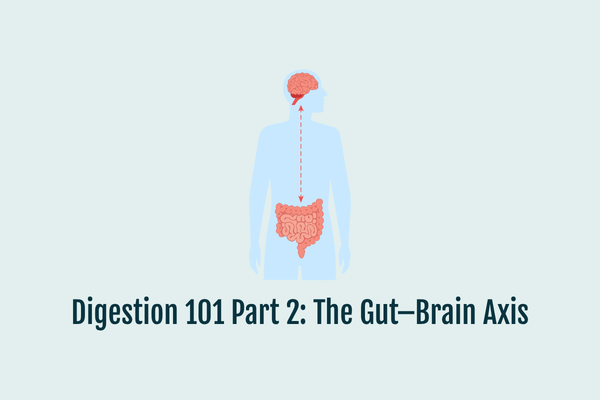
Digestion 101 Part 2: The Gut–Brain Axis
Written by: Sophia Schweiger
Reviewed by: Andrew Wade, MS, RDN, LDN, CSSD
In Part 1 of the Digest 101 series, we introduced the idea that digestion is not just about food moving through the gastrointestinal tract. Instead, digestion functions as a complex system of communication between the brain, nerves, hormones, and microbiome. When this communication becomes disrupted, symptoms such as bloating, abdominal pain, constipation, or diarrhea can develop.
For many individuals, IBS can feel confusing. Symptoms fluctuate, triggers are inconsistent, and medical testing often comes back “normal.” However, emerging research shows that IBS frequently stems from dysfunction in the gut–brain axis—the communication network linking the digestive system and the nervous system.
Let’s take a deeper dive into the gut–brain axis, why it matters for digestive health, and how disruptions within this system can contribute to IBS symptoms.
What is the Gut–Brain Axis?
The gut–brain axis is the bidirectional communication network connecting the brain and the gastrointestinal tract. This system involves several major components:
- The central nervous system (CNS): the brain and spinal cord
- The enteric nervous system (ENS): often called the “second brain” of the gut controlling secretions, motility, and immune responses in the gastrointestinal tract
- The vagus nerve, which transmits signals between the gut and brain
- Hormones and neurotransmitters such as serotonin
- The gut microbiome: a massive community of trillions of tiny microbes living in your gut
Together, these systems allow the brain and digestive tract to constantly exchange information about digestion, stress levels, immune activity, and nutrient status.
Why Stress Can Trigger Digestive Symptoms
Many people with IBS notice their symptoms worsen during periods of stress. This is not coincidence, but it reflects how the nervous system influences digestive function.
The body operates primarily within two nervous system states:
1. Sympathetic state (fight or flight)
2. Parasympathetic state (rest and digest)
Digestion functions best when the body is in a parasympathetic state, allowing adequate blood flow, enzyme production, and gut motility.
When stress activates the fight-or-flight response, several digestive changes occur:
- Reduced stomach acid production
- Slower digestive enzyme secretion
- Altered gut motility
- Increased intestinal sensitivity
Over time, repeated activation of the stress response can contribute to the digestive symptoms commonly seen in IBS, including bloating, abdominal pain, and irregular bowel movements.
The Cascade Effect
Digestive symptoms rarely originate from a single point in the gastrointestinal tract. Instead, digestion functions like a connected system—where dysfunction at one level can trigger a cascade of effects throughout the entire digestive process.
When stress disrupts these signals, digestion can become impaired from the very start. This disruption can then ripple throughout the gastrointestinal tract, contributing to the digestive symptoms many individuals experience.
Let’s take a closer look at how stress can cascade through the GI tract and influence digestion at multiple levels.
Reduced Digestive Signaling
Digestion actually begins in the brain before food reaches the stomach. When we see, smell, or anticipate food, the brain sends signals that stimulate stomach acid production, digestive enzymes, and gut motility.
However, when someone eats while stressed, distracted, or rushed, these signals may be weakened. As a result, digestion begins at a disadvantage before the meal even starts.
Changes in Stomach Function
Stress can alter stomach acid production and slow gastric emptying. When this occurs, food may remain in the stomach longer than expected, which can contribute to symptoms such as fullness, reflux, or upper abdominal bloating.
Poor breakdown of food in the stomach can also create a cascade effect further down the digestive tract, as larger food particles move into the intestines.
Altered Intestinal Motility
The gut relies on coordinated muscle contractions to move food through the digestive tract. This process known as motility is heavily regulated by the nervous system.
When stress alters these signals, motility can become either too slow or too fast. This helps explain why IBS symptoms often include both constipation and diarrhea, sometimes alternating between the two.
Increased Gut Sensitivity
One hallmark of IBS is visceral hypersensitivity, meaning the gut becomes more sensitive to normal digestive processes such as gas movement or intestinal stretching.
Stress signaling through the gut–brain axis can amplify this sensitivity, making otherwise normal digestive sensations feel uncomfortable or painful.
Effects on the Gut Microbiome
The gut microbiome also communicates with the brain through the gut–brain axis. Stress hormones can influence the balance of bacteria within the intestines, potentially contributing to microbial imbalances known as dysbiosis.
Over time, these shifts may affect fermentation patterns, gas production, and overall digestive comfort.
Practical Strategies to Support the Gut–Brain Axis
Because the gut and brain communicate constantly, improving digestive symptoms often involves more than changing what is on the plate. Supporting the nervous system can be an important part of improving symptoms associated with Irritable Bowel Syndrome and other digestive concerns.
Practice Mindful Eating
One of the simplest ways to support digestion is slowing down during meals. Eating quickly or while distracted can prevent the brain from sending the proper signals that initiate digestion.
Mindful eating practices may include:
- Taking a few deep breaths before starting a meal
- Chewing food thoroughly
- Limiting distractions such as phones or laptops while eating
These small changes allow the nervous system to transition into a parasympathetic state, which supports stomach acid production, digestive enzyme release, and healthy gut motility.
Create a Calm Eating Environment
Stress during meals can interfere with digestive signaling. Whenever possible, aim to eat in an environment that allows for relaxation and focus.
Helpful habits may include:
- Sitting down for meals rather than eating on the go
- Allowing enough time to finish meals without rushing
- Avoiding multitasking while eating
Incorporate Daily Stress-Management Practices
Since stress directly influences digestive function, incorporating regular stress-management strategies can help support gut health.
Examples include:
- Deep breathing exercises
- Yoga or gentle stretching
- Meditation or mindfulness practices
- Spending time outdoors
- Regular physical activity
These activities help regulate the nervous system and reduce prolonged activation of the fight-or-flight response that can disrupt digestion.
Prioritize Sleep
Sleep plays an important role in nervous system regulation, hormone balance, and gut health. Poor sleep can increase stress hormones and worsen digestive symptoms for many individuals.
Aim for consistent sleep routines by:
- Going to bed and waking up at similar times each day
- Limiting screens before bedtime
- Creating a relaxing nighttime routine
Pay Attention to Body Signals
Many individuals experiencing digestive symptoms have learned to ignore hunger, fullness, or stress signals. Reconnecting with these signals can help identify patterns between mood, meals, and symptoms.
Tracking meals, symptoms, and stress levels can sometimes reveal important connections to better understand digestive patterns and triggers.
Why Personalized Nutrition Matters in IBS
No two individuals experience digestive symptoms in the same way. Dietitians often use individualized assessment tools—such as detailed symptom logs tracking meals, mood, and digestive responses—to identify patterns and triggers.
This approach helps uncover whether symptoms are primarily driven by:
- Stress and nervous system activation
- Digestive enzyme or stomach acid concerns
- Food sensitivities
- Microbiome imbalances
Once the root drivers are identified, targeted nutrition interventions can be implemented rather than relying on broad dietary restrictions.
What’s Next
In the next blog, we’ll explore the next level of the GI tract: the stomach. We will discuss what the stomach is responsible for, as well as how dysfunction commonly shows up, and how we can troubleshoot these issues.
If you are dealing with digestive symptoms and are not sure where to start, get matched with your Case Specific dietitian in 5 clicks at casespecificnutrition.com/match. Our team provides individualized nutrition care throughout the Greater Pittsburgh area, with dietitians serving clients in East Liberty, Mt. Lebanon, the North Hills, Plum, Robinson, and Upper St. Clair–Peters Township, as well as in Erie, Altoona, and Raleigh.
Looking for more practical, evidence-informed nutrition and wellness guidance? Check out The Case Specific Podcast, where CEO and founder Andrew Wade, along with other CSN dietitians, discuss nutrition, health, fitness, and wellness; break down the science behind common nutrition questions; and share practical strategies you can use in everyday life. Listen to The Case Specific Podcast on our website, watch on YouTube, or listen on Spotify.
For more nutrition tips, educational content, team updates, and the latest from Case Specific Nutrition, follow us on Instagram and connect with us on LinkedIn.

.avif)
.webp)

