
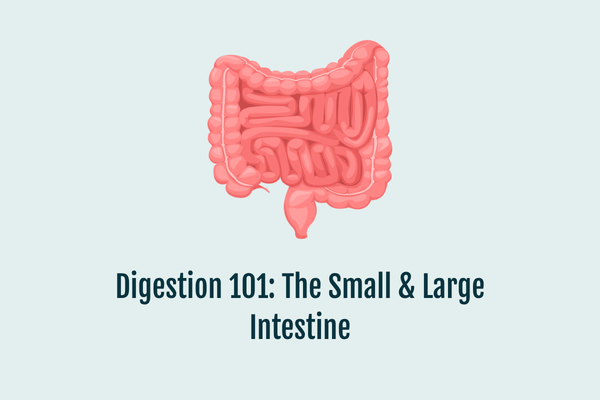
Digestion 101: The Small & Large Intestine
Written by: Sophia Schweiger
Reviewed by: Andrew Wade, MS, RDN, LDN, CSSD
In the last Digestion 101 blog, we explored how the stomach breaks food down into a semi-liquid mixture called chyme. But digestion doesn't end there. Once food leaves the stomach, it enters the small intestine, where most nutrient absorption occurs, before moving into the large intestine, where water balance, beneficial bacteria, and stool formation become the primary focus.
Although these organs have very different responsibilities, they work together to absorb nutrients, support immune health, and keep the digestive system functioning efficiently.
The Small Intestine
Following digestion in the stomach, chyme enters a long series of tubes collectively known as the intestines. The intestines are made up of the small and large intestine, each with specialized roles in the digestive process.
The small intestine consists of three sections—the duodenum, jejunum, and ileum. Together, these segments are responsible for absorbing the majority of nutrients from the food we eat. Tiny finger-like projections called villi and even smaller structures called microvilli dramatically increase the intestine's surface area, allowing nutrients to be absorbed efficiently into the bloodstream.
To support this process, the small intestine also receives bile and digestive enzymes from accessory digestive organs, helping further break down carbohydrates, proteins, and fats into forms the body can absorb.
In fact, the small intestine is responsible for absorbing approximately 90% of the nutrients consumed, including carbohydrates, protein, fat, vitamins, and minerals. Stretching nearly 20 feet long with an estimated 250–300 square meters of absorptive surface area, it is uniquely designed to maximize nutrient uptake.
When the Small Intestine Isn't Functioning Optimally
Because the small intestine is responsible for breaking down and absorbing nutrients, problems in this part of the digestive tract can sometimes lead to uncomfortable symptoms.
Common symptoms may include:
- Bloating
- Abdominal distention
- Excess gas
- Certain food intolerances
- Discomfort that develops about 1½ to 3 hours after eating, rather than immediately after a meal
The timing of these symptoms can be an important clue. Since food has already left the stomach by this point, symptoms that develop a couple of hours after eating may suggest that the small intestine is where digestion is becoming less efficient.
Several factors may contribute to intestinal dysfunction, including:
- Reduced digestive enzyme activity, making it more difficult to fully break down carbohydrates, proteins, or fats.
- Changes in the balance of gut bacteria, including conditions such as small intestinal bacterial overgrowth (SIBO), where bacteria grow in areas they normally shouldn't.
- Poor digestion higher in the digestive tract, allowing larger food particles to reach the intestines before they have been properly broken down.
- Difficulty digesting certain fermentable carbohydrates (FODMAPs), which can increase gas production and bloating in some individuals.
While these symptoms can have many different causes, understanding where and when they occur is one piece of the puzzle that can help healthcare providers better understand what may be happening.
It's also important to remember that digestive symptoms don't always begin where they're felt. Because each section of the gastrointestinal tract depends on the one before it, symptoms experienced in the intestines may sometimes reflect dysfunction occurring earlier in the digestive process. Looking at digestion as an interconnected system—not just isolated organs—can provide a more complete picture of digestive health.
The Large Intestine
The large intestine—also referred to as the colon—is often thought of simply as the place where waste is stored before leaving the body. However, it plays several important roles in overall health.
As partially digested food enters the colon, the large intestine helps:
- Absorb water back into the body
- Reclaim electrolytes
- Form and store stool
- Provide a home for trillions of beneficial bacteria
- Produce compounds that help support the health of the intestinal lining and immune system
Unlike the small intestine, very little nutrient absorption occurs here. Instead, the large intestine focuses on maintaining fluid balance while allowing beneficial bacteria to continue processing components of food that were not fully digested earlier in the digestive tract.
When the Colon Isn't Functioning Optimally
Like the rest of the digestive tract, the large intestine can experience dysfunction for many different reasons. Because its primary roles are to absorb water, support the gut microbiome, and move waste through the body, disruptions in any of these processes can lead to digestive symptoms.
Some common signs that the colon may not be functioning optimally include:
- Constipation or infrequent bowel movements
- Diarrhea or alternating constipation and diarrhea
- Bloating or abdominal distention
- Excess gas, particularly if it is persistent or foul-smelling
- Lower abdominal cramping or discomfort
- A feeling of incomplete bowel emptying
Several factors may contribute to altered colon function, including:
- Low fiber intake, which may reduce stool bulk and slow movement through the colon
- Inadequate fluid intake, making stools harder to pass
- Slower intestinal transit, allowing more water to be absorbed from stool
- Changes in gut motility, such as those seen with irritable bowel syndrome (IBS), which can lead to unpredictable bowel habits
- Pelvic floor dysfunction, where the muscles involved in bowel movements do not coordinate properly
- Certain medical conditions, such as an underactive thyroid, which can slow movement throughout the digestive tract
Because many different conditions can produce similar symptoms, it's important not to assume that occasional constipation or bloating has a single cause. Looking at symptom patterns, bowel habits, diet, lifestyle, and medical history together provides a much more complete picture of digestive health.
The Gut Microbiome
One of the most fascinating features of the large intestine is the gut microbiome—the trillions of bacteria, fungi, and other microorganisms that naturally live in the colon.
While the word "bacteria" often has a negative reputation, many of these microbes perform important jobs that help keep us healthy.
Some of their responsibilities include:
- Fermenting dietary fiber that the body cannot digest on its own
- Producing beneficial compounds called short-chain fatty acids (SCFAs), including butyrate, which serves as a major fuel source for cells lining the colon
- Communicating with the immune system
- Helping maintain the intestinal barrier
- Supporting overall digestive health
Research continues to uncover new ways the microbiome influences health, making it one of the most exciting areas of digestive science today.
What Happens When Food Reaches the Colon?
Not everything we eat is meant to be completely digested in the small intestine. Certain fibers and carbohydrates naturally continue into the large intestine, where they become food for beneficial gut bacteria. During this process, bacteria ferment these nutrients, producing helpful compounds, as well as gas.
Because of this, gas production is completely normal and is actually a sign that your gut microbes are doing their job.
However, if excessive amounts of undigested food reach the colon—or if the gut microbiome becomes imbalanced—fermentation may produce more gas than usual. This can contribute to bloating, abdominal discomfort, and changes in bowel habits.
This is one reason why fiber itself isn't "bad." In fact, fiber is essential for digestive health. The goal is not to avoid fiber altogether, but to understand why certain types or amounts may be better tolerated than others depending on the individual.
Understanding Timing Can Provide Clues
When digestive symptoms occur can sometimes provide insight into where they may be originating.
When symptoms appear:
Within 30–60 minutes after eating
May suggest involvement of...
Upper digestive tract (brain/stomach)
When symptoms appear:
About 1½–3 hours after eating
May suggest involvement of...
Small intestine
When symptoms appear:
Several hours later or unrelated to meals
May suggest involvement of...
Large intestine
It's important to remember that symptom timing alone cannot diagnose a digestive condition. However, recognizing patterns can provide valuable information when discussing symptoms with a registered dietitian or healthcare provider.
Supporting a Healthy Intestine
While every person's digestive system is unique, several everyday habits can help support both the small and large intestine.
Consider focusing on:
- Eating a variety of fiber-rich foods
- Drinking enough water throughout the day
- Including fermented foods when tolerated
- Allowing adequate time between meals rather than constantly grazing
- Managing stress through healthy coping strategies
- Staying physically active
These simple habits support digestion from multiple angles and help create an environment where the digestive system can function at its best. To learn more about supporting digestive health, read "Gut Health Hacks: How to Fix Your Digestion & Feel Your Best" on the Case Specific Nutrition website under the Media section.
Looking Ahead
In the next blog of the series, we'll explore two important accessory digestive organs—the pancreas and gallbladder—and learn how the enzymes and bile they produce help the small intestine efficiently digest and absorb the nutrients your body needs.
If you are experiencing digestive discomfort or just want to proactively optimize your gut health, get matched with your Case Specific dietitian in 5 clicks at casespecificnutrition.com/match. Our team provides individualized nutrition care throughout the Greater Pittsburgh area, with dietitians serving clients in East Liberty, Mt. Lebanon, the North Hills, Plum, Robinson, and Upper St. Clair–Peters Township, as well as in Erie, Altoona, and Raleigh.
Looking for more practical, evidence-informed nutrition and wellness guidance? Check out The Case Specific Podcast, where CEO and founder Andrew Wade, along with other CSN dietitians, discuss nutrition, health, fitness, and wellness; break down the science behind common nutrition questions; and share practical strategies you can use in everyday life. Listen to The Case Specific Podcast on our website, watch on YouTube, or listen on Spotify.
For more nutrition tips, educational content, team updates, and the latest from Case Specific Nutrition, follow us on Instagram and connect with us on LinkedIn.

.avif)
.webp)

