
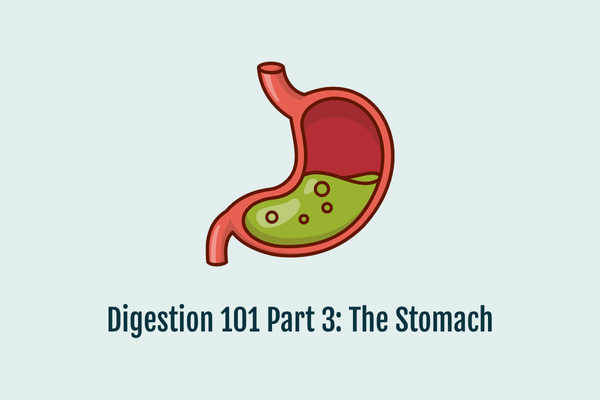
Digestion 101: The Stomach
Written by: Sophia Schweiger
Reviewed by: Andrew Wade, MS, RDN, LDN, CSSD
After food leaves the mouth and esophagus, it arrives in the stomach—one of the hardest-working organs in the digestive system. While many people associate the stomach only with acid or heartburn, its role is much bigger than that. The stomach helps break food down mechanically and chemically, prepares nutrients for absorption, and signals the rest of the digestive tract to continue the digestive process.
What Does the Stomach Actually Do?
The stomach acts like both a storage pouch and a blender. Once food enters, the stomach:
- Churns and mechanically breaks food apart to create a substance called chyme
- Produces hydrochloric acid (HCl) to help digest proteins
- Activates digestive enzymes like pepsin
- Helps kill harmful bacteria and pathogens
- Regulates how quickly food moves into the small intestine
When stomach function is working well, digestion feels relatively effortless. But when something is off, symptoms can begin early in the digestive process, creating downstream effects throughout the gut.
Signs the Stomach May Not Be Functioning Optimally
Certain symptom patterns can point toward stomach dysfunction, especially symptoms that occur during meals or within 30–90 minutes afterward.
Common stomach-related symptoms may include:
- Early fullness or heaviness
- Bloating shortly after meals
- Burping or reflux
- Nausea
- Heartburn
- Difficulty tolerating high-fat foods
- Slow digestion
These symptoms can sometimes be associated with conditions such as:
- Acid reflux/GERD
- Functional dyspepsia
- Gastritis
- Low stomach acid production
- Delayed gastric emptying (gastroparesis)
What Can Trigger Stomach Dysfunction?
Many factors can impair stomach function, including:
Stress & Nervous System Dysregulation
Digestion depends heavily on the parasympathetic (“rest and digest”) nervous system. Eating while rushed, distracted, anxious, or stressed can reduce stomach acid production and impair digestion.
Long-Term Acid Suppression
Prolonged use of acid-blocking medications like omeprazole may reduce the stomach’s ability to properly break down food.
Poor Meal Structure
Constant grazing, eating too quickly, or inadequate chewing can all burden the stomach and disrupt normal digestive signaling.
Nutritional & Lifestyle Factors
Very low-fat diets, dehydration, irregular meal timing, and inadequate protein intake may also affect digestion upstream.
Why the Stomach Matters for the Rest of the Gut
The stomach is only the beginning of digestion, but it sets the stage for everything downstream.
If food is not properly broken down in the stomach:
- Larger food particles enter the small intestine
- Digestive enzymes may struggle to fully break nutrients down
- Fermentation and gas production can increase as a result
- Bloating, discomfort, and irregular bowel patterns may develop later in digestion
In many cases, symptoms that seem like “gut” or microbiome issues may actually begin upstream with impaired stomach function.
Supporting Healthy Stomach Function
The good news is that many foundational habits can significantly improve digestive comfort. These habits include:
Slow Down While Eating
Taking a few deep breaths before meals, sitting down to eat, and reducing distractions can help activate the nervous system needed for optimal digestion.
Improve Meal Hygiene
Spacing meals about 3–4 hours apart and avoiding constant snacking throughout the day may help support normal digestive motility.
Support Stomach Acid & Digestion
Depending on symptoms, some individuals may benefit from targeted digestive support such as:
- Digestive enzymes
- Betaine HCl + pepsin
- Gut-soothing supplements
- Adjustments to hydration and fiber intake
*As always, supplements should be individualized and discussed with a registered dietitian, or another health care professional.
How a Dietitian Can Help
Digestive symptoms are not one-size-fits-all. A dietitian can help identify:
- Symptom timing patterns
- Potential upstream contributors
- Food and lifestyle triggers
- Whether symptoms point toward stomach dysfunction, small intestine issues, or microbiome involvement
- Specific treatment protocols catered to problems identified
Rather than jumping immediately into restrictive diets or aggressive gut protocols, a registered dietitian focuses first on restoring foundational digestive function.
By improving meal habits, stress management, nutrient intake, and digestive support, many experience significant improvements in bloating, reflux, fullness, and overall digestive comfort.
What’s Next
In part four of the Digestion 101 series, we’ll explore the next level of the GI tract: the intestines. Stay tuned for a closer look at nutrient absorption, the microbiome, bowel patterns, and how the small and large intestines influence everything from bloating to overall health.
If you are dealing with digestive symptoms and are not sure where to start, get matched with your Case Specific dietitian in 5 clicks at casespecificnutrition.com/match. Our team provides individualized nutrition care throughout the Greater Pittsburgh area, with dietitians serving clients in East Liberty, Mt. Lebanon, the North Hills, Plum, Robinson, and Upper St. Clair–Peters Township, as well as in Erie, Altoona, and Raleigh.
Looking for more practical, evidence-informed nutrition and wellness guidance? Check out The Case Specific Podcast, where CEO and founder Andrew Wade, along with other CSN dietitians, discuss nutrition, health, fitness, and wellness; break down the science behind common nutrition questions; and share practical strategies you can use in everyday life. Listen to The Case Specific Podcast on our website, watch on YouTube, or listen on Spotify.
For more nutrition tips, educational content, team updates, and the latest from Case Specific Nutrition, follow us on Instagram and connect with us on LinkedIn.


.avif)
.webp)

